Paver patios, walkways and driveways
Interlocking pavers are strong, easy to repair and come in many shapes and colors. Lay them in a herringbone pattern for driveways, a running bond for walkways, or a mix of sizes for a patio with an old-world feel. Because each paver is a separate unit, a stained or damaged one can be lifted and replaced without breaking up the whole surface.
The base is what keeps pavers flat
Pavers that sink, shift or grow weeds almost always sit on a thin or poorly compacted base. We excavate to the right depth, install and compact base rock in lifts, screed a bedding layer, then lock the field in place with edge restraints and joint sand. Driveways get a deeper base than patios. The extra work underground is what keeps the surface flat for years.
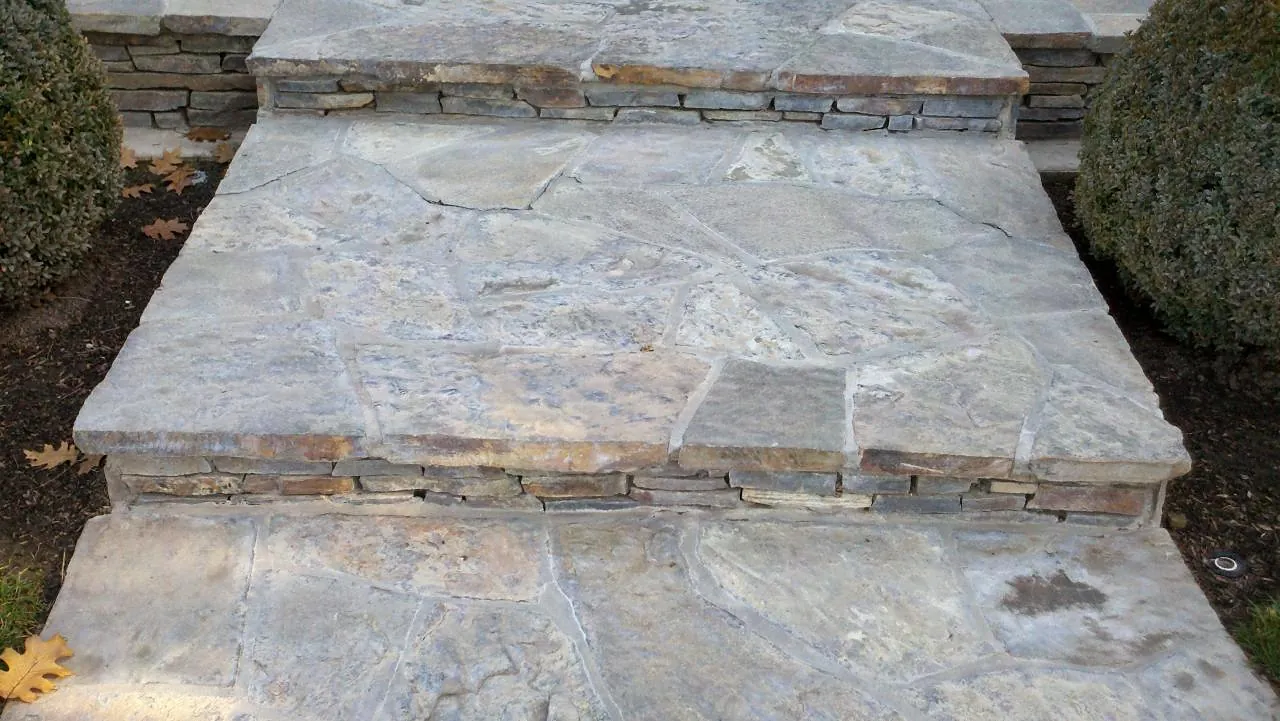
Flagstone patios and paths
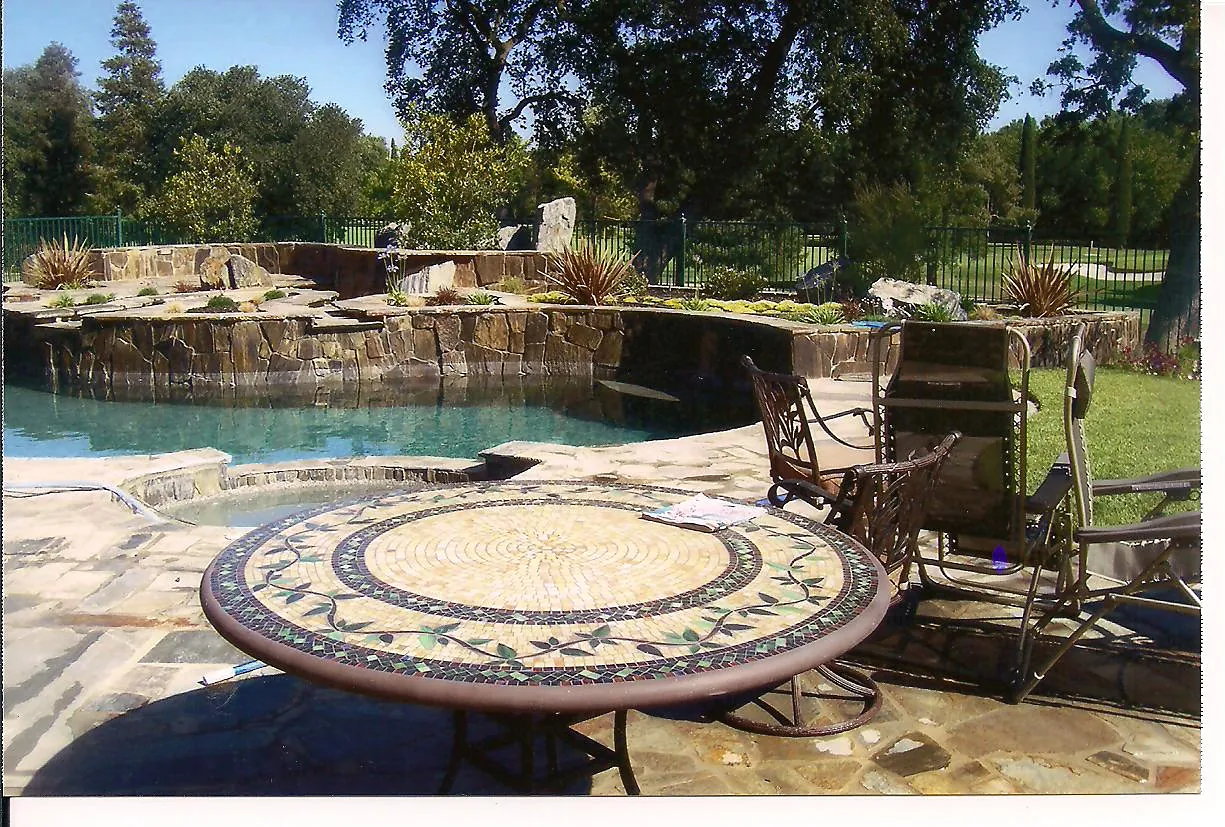
Natural flagstone has an irregular, organic look that suits gardens, pool surrounds and pathways. We set flagstone dry in sand and gravel for a relaxed, permeable surface, or wet in mortar over a concrete slab for a solid, finished surface with tight joints.
What we offer
- Paver patios
- Paver driveways
- Paver walkways and pool decks
- Clay brick pavers
- Flagstone set in sand or mortar
- Steps, borders and edging
- Paver repair and re-leveling
Recent projects
Frequently asked questions
Are pavers better than concrete?
Each has advantages. Pavers are easy to repair in sections and offer a handcrafted look. Poured or stamped concrete usually costs less per square foot. We are licensed for both, so we can price them side by side.
Why do some paver patios sink or get weeds?
Sinking comes from a thin or poorly compacted base. Weeds come from washed-out joint sand. We build a full compacted base and lock the joints with sand so the surface stays level and tight.
Can pavers be used for a driveway?
Yes, with a deeper base and a paver thickness and pattern suited for vehicle traffic. Herringbone is the strongest pattern for driveways.